The concept of representation is fundamental to the constructed nature of all media. Representation is the process in which concepts or physical objects are constructed to appear ‘real/natural’. This includes people, places, events and ideas.
The study of this process, known as ‘mediation’, enables students to understand how multiple meanings can be constructed and how they can be accepted or challenged by a specific audience. An important aspect of analysing representation is the process of stereotyping through which over-simplified representations become naturalised, and through shared values, become associated with particular issues and cultural groups. This oversimplification occurs through selection processes to create a dominant reading. By applying the principles of encoding and decoding, students are able to communicate their understandings of the construction and interpretation of representations.
Introduction
Representation is how media texts deal with and present gender, age, ethnicity, national and regional identity, social issues and events to an audience. Media texts have the power to shape an audience’s knowledge and understanding about these important topics.
This makes them very powerful in terms of influencing ideas and attitudes.
In order to analyse media texts to determine how they’ve represented ideas and issues, it’s important to be familiar with some of the key terms.
Key terms in Representation:
Construction
This is the way a media text is put together. In a film or television programme this includes the editing and choice of camera angles, in a magazine or newspaper it includes the layout and writing as well as the choice of images.
Mediation
This is the process everything goes through before it reaches an audience.
This can be how a film script is written and re-written before it makes it to production, how newspaper or magazine photographs are cropped and captioned, or how real life events – like a protest or a speech by a politician – are portrayed in a news report.
Selection
This refers to what has been selected to include in a media text.
This can be particularly important in newspaper articles, where selecting certain facts over others can change the angle of a story; what is omitted is sometimes as important as what is included.
Anchorage
These are the words that go along with images to give those pictures a certain meaning in a specific context. This includes captions and headlines in newspapers and taglines in adverts or on film posters.
Stereotypes
These are a simplified representation of a person, groups of people or a place, through basic or obvious characteristics – which are often exaggerated.
For example, Vicky Pollard from Little Britain is a stereotypical example of a working class teenage girl.
They can be used to describe characters quickly, relying on existing audience recognition.
Stereotypes are dangerous as they can lead audiences to generalise about people or places.
Ideology
These are ideas and beliefs, held by media producers, which are often represented in their media texts.
In a newspaper, the ideology of the owner or senior editors could influence the way certain stories are represented, such as lending support to a particular political party.
In a documentary about asylum seekers, the representation of their story could be influenced by the ideology of the filmmaker or producer.
How are representations constructed?
Camera shots and angles
A low angle camera shot can make someone seem more powerful and in control than they really are.
A high angle shot of the same person may make them seem less important or influential.
Editing
Media producers can manipulate the emotions of the audience by representing certain characters or situations through editing.
For a documentary style reality show, like Don’t Tell the Bride, many hours of film footage may have been recorded, but this footage is edited down to fill a one hour broadcast.
How it is edited will determine how the characters are represented and how the audience respond to them.

Reality shows like ‘Don’t Tell the Bride’ edit down many hours of footage to create a one hour programme
Audio codes
The representation of a person or fictional character can be influenced through their dialogue; if they use slang or speak with a strong accent, audiences will respond to that person in a very different way than someone who speaks perfect English without the trace of an accent.
Music can also influence representation in a media text. In a film scene, where a character is walking down a street, a slow, sombre piece of music will create a very different representation to a cheerful, upbeat tune.
In this trailer, the ominous voiceover is emphasised by the dramatic music and sound effects which, when combined, create a chilling sense of what the programme has in store.
Luther’s character is a stereotypical representation of a tough guy detective, but there are also representations of gender and ethnicity as he is a black male.
This positive representation of Luther’s ethnicity challenges negative media representation of black men, which sometimes portrays them as the criminal rather than the detective.
Visual Codes
Iconography (the visual images or symbols that appear in a scene) can influence representation
For example, iconography can have a big impact on a representation of femininity – a character carrying a briefcase and wearing a smart suit creates a very different representation of femininity than a character carrying a changing bag and pushing a buggy.
Representation in print
In print based media texts representation is constructed using:
- Layout and Design
- Language and Mode of Address
- Camera shots and angles in any photographs
- Visual codes
- Anchorage
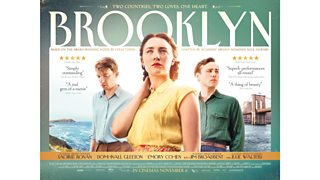
The film poster for “Brooklyn” contains a number of different representations.
In this poster for the film Brooklyn, there are representations of gender, place and the past.
The style of font used (design) along with the costumes worn by the three characters (visual codes), and the colours used reflect the 1950s when the film is set. Taken together, the colours and images are soft and warm, and represent the past in a nostalgic way; this is a romantic, idealised representation of the past (mode of address).
Gender is represented by the positioning of the three characters (layout): the main character Eilis (Saoirse Ronan) is in the middle of the poster and shown from a low angle (camera shots), and she looks directly ahead of her, over the heads of anyone looking at the poster.
These elements combine to represent her as a strong, confident female who is at the centre of this story.
The layout also emphasises that the story has two sides which is represented by the two men pictured and the images behind them.
The left hand side of the poster features a picture of Jim (Domnhall Gleeson): he is pictured against the rugged Irish coast and is looking down and to the left (visual codes). In this way, he represents Eilis’s past in Ireland.
The right hand side features Tony (Emory Cohen), Eilis’ love interest in America, and he is looking up and to the right. He is pictured against the towering Brooklyn Bridge – this represents Eilis’ life in Amercia and maybe her future as well.
The tag line at the top of the poster – ‘Two countries, two loves, one heart’ – anchors (anchorage) the images and gives the audience an idea of what the film is representing: romantic love.